

Understanding Why Your Refrigerator Suddenly Started Leaking
📋 In This Guide
- ▸The Blocked Defrost Drain: The Most Common Leak Source
- ▸Door Seal Problems Creating Excessive Condensation
- ▸Water Line and Inlet Valve Complications
- ▸Improper Leveling Causing Water to Pool
- ▸Ice Maker Malfunctions and Frozen Fill Tubes
- ▸The Drain Pan: When the Catch Basin Becomes the Problem
- ▸When to Call Professional Refrigerator Repair Services
- ▸Preventing Future Refrigerator Water Leaks
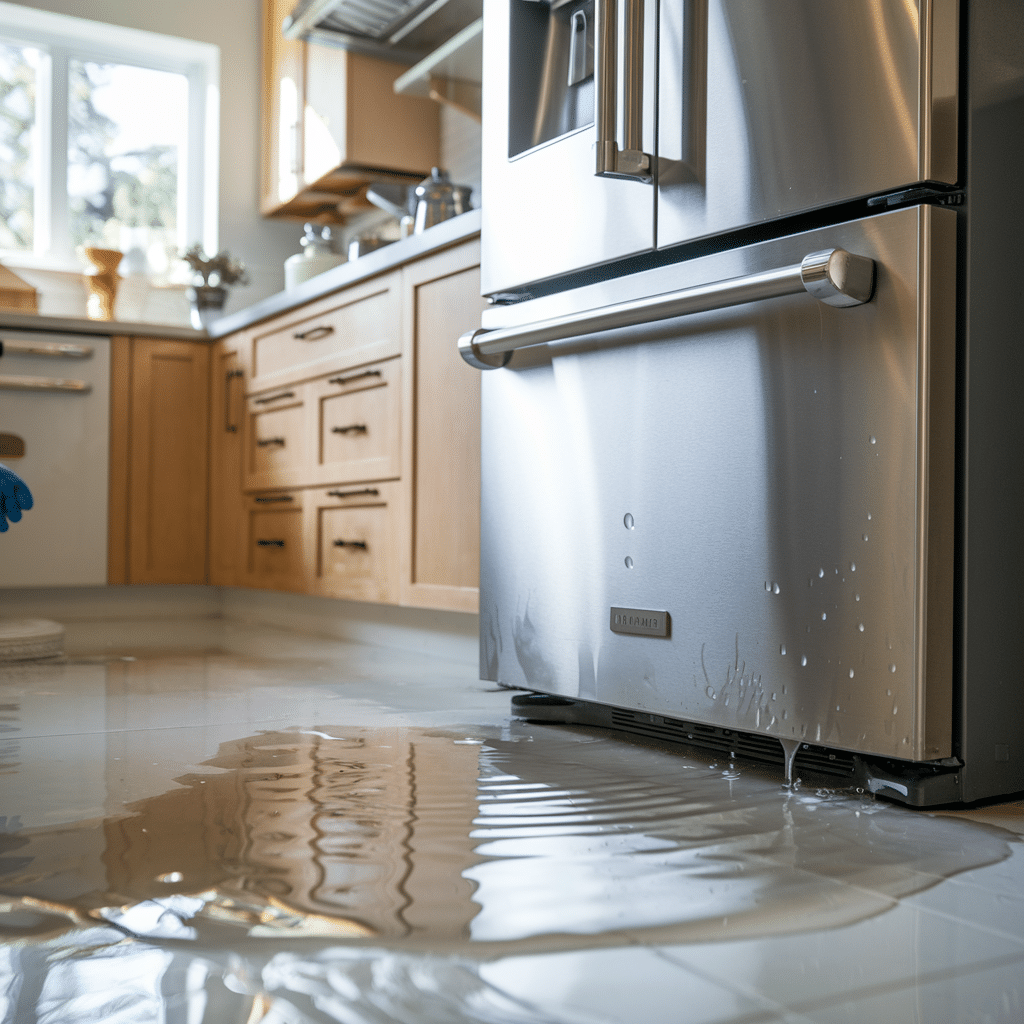
Discovering a puddle of water beneath your refrigerator in your Newbury Park or Dos Vientos Ranch home isn’t just inconvenient—it’s often a signal that something needs immediate attention. For Thousand Oaks homeowners managing properties valued around $887,000, a seemingly minor water leak can quickly escalate into damaged hardwood floors, warped cabinetry, or even mold growth behind walls.
Most refrigerator water leaks stem from straightforward mechanical issues that don’t require replacing the entire appliance. Whether you’ve got a French door model from Pacific Sales Kitchen & Home in Thousand Oaks or a side-by-side unit picked up at Best Buy, understanding what causes these leaks helps you make informed decisions about repairs versus DIY solutions.
This comprehensive guide examines the seven most common culprits behind refrigerator water leaks, provides step-by-step troubleshooting you can perform safely, and clarifies when it’s time to contact professional Refrigerator Repair in Thousand Oaks services. Let’s identify what’s causing that puddle and get your appliance back to normal operation.
The Blocked Defrost Drain: The Most Common Leak Source
The defrost drain represents the single most frequent cause of refrigerator water leaks in Thousand Oaks homes. This small opening, typically located at the back of the freezer compartment or beneath the crisper drawers, channels melted frost and condensation into a drain pan beneath your refrigerator. When food particles, mineral deposits from California’s notoriously hard water, or ice accumulation block this passage, water backs up and eventually spills onto your kitchen floor.
**How to check your defrost drain:**
First, unplug your refrigerator for safety. Remove all contents from the freezer compartment and locate the small drain opening—it’s usually covered by a plastic panel. Mix a solution of warm water and a teaspoon of baking soda, then carefully pour it down the drain using a turkey baster or small funnel. If the water doesn’t flow freely, the drain is likely clogged.
For stubborn blockages, use a flexible pipe cleaner or a piece of flexible wire to gently probe the drain opening. Never use sharp objects that could puncture the drain tube. If you’re working with mineral deposits common in the Lang Ranch or Wildwood areas where water hardness is particularly high, a solution of equal parts white vinegar and warm water can help dissolve buildup.
Once you’ve cleared the blockage, flush the drain with clean water to ensure proper flow. If water still doesn’t drain properly after your attempts, the drain tube itself may be frozen or damaged internally, requiring professional diagnosis and repair from our appliance repair services in Thousand Oaks.
Door Seal Problems Creating Excessive Condensation
Your refrigerator’s door gasket—the rubber seal running along the door’s perimeter—creates an airtight barrier that maintains proper temperature and humidity levels. When this seal becomes worn, torn, or dirty, warm Thousand Oaks air infiltrates the cold interior, causing excessive condensation that eventually collects as water underneath the appliance.
**Testing your door seal integrity:**
Perform the dollar bill test: close a dollar bill in the refrigerator door so half extends outside. Try pulling the bill out. You should feel significant resistance. Repeat this test around the entire door perimeter, including corners. If the bill slides out easily at any point, that section of the gasket isn’t sealing properly.
Visually inspect the gasket for cracks, tears, or areas where it’s pulling away from the door. Pay special attention to the bottom seal, where water accumulation is most likely. Clean the gasket thoroughly using warm soapy water and a soft cloth—accumulated food residue and grime prevent proper sealing.
For minor gasket issues, cleaning and ensuring the door closes properly may solve the problem. Check that nothing inside the refrigerator prevents the door from closing completely, and verify that the appliance sits level (more on leveling below). Severely damaged gaskets require replacement, a repair that typically costs between $150-$250 in the Thousand Oaks area—far less expensive than water damage repairs.
Water Line and Inlet Valve Complications
Refrigerators equipped with ice makers or water dispensers rely on a water supply line and inlet valve to function. These components can develop leaks due to loose connections, cracked tubing, mineral buildup, or valve failure. Unlike internal drainage issues, water line problems often create larger puddles that appear suddenly rather than gradually.
**Inspecting water supply components:**
Locate your refrigerator’s water supply line, typically connected at the bottom rear of the unit. Pull the refrigerator away from the wall carefully (have someone help—these appliances are heavy). Examine the entire visible length of the supply line for moisture, cracks, or obvious damage. Check both the connection to your home’s water supply and where it enters the refrigerator.
Tighten any loose compression fittings using an adjustable wrench, but don’t over-tighten, which can crack the fittings. If you notice corrosion or mineral deposits around connections, this indicates a slow leak that has existed for some time. California’s hard water accelerates mineral buildup in supply lines, sometimes creating restrictions that increase pressure and cause fittings to fail.
The inlet valve, located where the water line enters the refrigerator, contains a solenoid that opens and closes to allow water flow. If this valve sticks open or develops a crack in its housing, water can leak continuously. Testing inlet valve function requires a multimeter and some technical knowledge—most Thousand Oaks homeowners prefer having professional technicians handle this diagnosis.
**Important safety note:** Always turn off the water supply to your refrigerator before disconnecting any water lines. The shut-off valve is typically located beneath your kitchen sink or in the basement.
Improper Leveling Causing Water to Pool
Refrigerators must sit slightly tilted backward (typically 1-2 degrees) to allow condensation and defrost water to flow properly toward the rear drain. When an appliance sits perfectly level or tilts forward, water accumulates in the wrong areas and eventually spills onto your floor. This issue is surprisingly common in newer Conejo Oaks homes where floors may settle slightly after construction.
**Checking and adjusting refrigerator level:**
Place a carpenter’s level on top of your refrigerator from front to back. The bubble should show a slight backward tilt. Side-to-side, the refrigerator should be perfectly level. Most refrigerators have adjustable front legs that you can raise or lower by turning them clockwise or counterclockwise.
To access these adjustment legs, you may need to remove the front grill panel at the bottom of the refrigerator. Use a wrench or pliers to turn the adjustment screws. Raise the front legs slightly to create the proper backward tilt. After adjusting, run your hand across the floor underneath—if you feel existing water, clean it thoroughly and monitor for 24 hours to see if the leak returns.
Proper leveling not only prevents leaks but also helps your refrigerator run more efficiently, reduces compressor noise, and ensures doors close automatically when pushed nearly shut. If your kitchen floor itself is significantly uneven, you may need shims in addition to leg adjustments. For refrigerators installed in custom cabinetry common in Thousand Oaks homes, limited access to adjustment legs may require professional assistance.
Ice Maker Malfunctions and Frozen Fill Tubes
Ice maker assemblies introduce multiple potential leak points: the fill tube that supplies water to ice molds, the ice maker unit itself, and the mechanism that harvests ice cubes. When these components malfunction or when the fill tube freezes, water can leak into the freezer compartment and eventually find its way to your kitchen floor.
**Diagnosing ice maker-related leaks:**
Open your freezer and inspect the ice maker and surrounding area for ice buildup, which indicates water is escaping where it shouldn’t. Check the ice bin itself—if it contains frozen clumps rather than individual cubes, water is leaking and refreezing. Remove the ice bin and look behind it for signs of ice accumulation or water stains.
The fill tube (the small tube that carries water into the ice maker mold) can freeze due to low freezer temperatures or restricted airflow. If frozen, you’ll hear the ice maker attempting to fill but no water will flow. You can thaw a frozen fill tube using a hair dryer on low heat, but this is a temporary fix—if the tube freezes repeatedly, the freezer temperature setting may be too low or the fill tube insulation may be inadequate.
Some ice maker leaks occur when the unit overfills due to a faulty water inlet valve or incorrect water pressure. Your home’s water pressure should be between 40-120 psi for proper ice maker function. Pressure below 40 psi may prevent the ice maker from filling properly, while pressure above 120 psi can cause overfilling and leaks.
If you’ve ruled out other causes and suspect ice maker issues, you can temporarily disable the ice maker while monitoring for leaks. If the leaking stops, you’ve confirmed the ice maker as the culprit. Professional repair or replacement of the ice maker assembly typically costs $200-$400 in Thousand Oaks, depending on your refrigerator model.
The Drain Pan: When the Catch Basin Becomes the Problem
Every refrigerator has a drain pan (also called a drip pan) beneath the appliance that collects condensation and defrost water. Under normal circumstances, this water evaporates naturally due to warm air circulation from the compressor. However, a cracked drain pan, a pan that has shifted out of position, or excessive water accumulation can cause leaks.
**Accessing and inspecting your drain pan:**
The drain pan location varies by refrigerator model. On most units, you’ll access it by removing the front grill panel at the bottom of the refrigerator. The pan typically slides out from the front or rear of the appliance. Have towels ready—there’s usually some water in the pan.
Once removed, inspect the pan for cracks, particularly at corners and mounting points. Even small cracks can allow significant water leakage over time. Check that the pan sits level and that nothing obstructs its position. Also verify that the drain tube from inside the refrigerator actually terminates over the drain pan—if it has become disconnected or misaligned, water flows onto your floor instead of into the pan.
Excessive water in the drain pan suggests the evaporation process isn’t working properly, often due to a dirty condenser coil that restricts airflow. Clean the condenser coils (usually located on the rear or beneath the refrigerator) using a coil brush and vacuum. Regular coil cleaning, which annual maintenance services can provide, prevents multiple refrigerator problems including leaks, poor cooling, and excessive energy consumption.
Replacement drain pans are relatively inexpensive ($20-$60), but finding the correct pan for your specific model can be challenging. Professional technicians maintain access to manufacturer-specific parts that aren’t readily available at retailers like Lowe’s Home Improvement in Thousand Oaks.
When to Call Professional Refrigerator Repair Services
While many water leak causes can be diagnosed and sometimes resolved through DIY efforts, certain situations require professional expertise. Understanding when to call for help saves you time, prevents potential appliance damage, and avoids safety risks.
**Call a professional immediately if:**
– You’ve identified the leak source but lack the tools or confidence to perform the repair safely
– The refrigerator is still under warranty (DIY repairs may void coverage)
– You discover electrical components near the water leak
– The leak involves the sealed refrigeration system, such as evaporator coil issues
– You’ve attempted DIY fixes but the leak persists or worsens
– You notice refrigerant smells (which indicate a far more serious problem than water leakage)
– The water appears to be coming from inside the walls of the refrigerator compartment
Professional repair services bring specialized tools, manufacturer training, and access to OEM parts. Technicians can also identify related problems you might miss—for instance, a leak caused by a failing compressor that’s also causing gradual cooling loss. Early professional intervention often prevents more expensive repairs down the road.
ACE Appliance Heating and Cooling serves Thousand Oaks and surrounding communities including Westlake Village, Newbury Park, and Agoura Hills with same-day refrigerator repair services. Our technicians understand the unique challenges California homeowners face, from hard water issues to the impact of our climate on appliance performance. We service all major brands and provide transparent pricing before beginning any work.
For immediate assistance with your leaking refrigerator, call **(805) 696-6263** to schedule a diagnostic appointment.
Preventing Future Refrigerator Water Leaks
Once you’ve resolved your current leak situation, implementing preventive maintenance practices helps avoid repeat problems and extends your refrigerator’s lifespan—crucial for protecting your investment in your Thousand Oaks home.
**Essential preventive maintenance:**
**Quarterly tasks:** Clean the defrost drain using the warm water and baking soda solution described earlier, even if you’re not experiencing leaks. This prevents gradual buildup that eventually causes blockages. Inspect door gaskets for wear and clean them thoroughly.
**Semi-annual tasks:** Check water supply line connections for tightness and signs of corrosion. Examine the drain pan for developing cracks. Clean condenser coils to ensure proper evaporation of drain pan water and optimal refrigerator efficiency. Verify proper leveling, especially if you’ve noticed doors not closing automatically.
**Annual tasks:** Consider professional maintenance service that includes comprehensive inspection of all leak-prone components, refrigerant level checks, temperature calibration, and thorough cleaning of internal drainage systems. Our $95 annual refrigerator maintenance service covers these essential preventive measures.
**Address California water quality:** Install an inline water filter on your refrigerator’s supply line to reduce mineral deposits that cause clogs and valve failures. Replace these filters according to manufacturer recommendations—typically every six months. The modest investment in filtration prevents expensive repairs and improves ice and water dispenser taste.
**Monitor humidity levels:** Thousand Oaks experiences varying humidity throughout the year. During humid periods, your refrigerator works harder to manage condensation. Avoid leaving refrigerator doors open unnecessarily, don’t overcrowd the interior (which restricts airflow), and ensure adequate space between the refrigerator and walls for proper ventilation.
For homeowners in Dos Vientos Ranch, Lang Ranch, and surrounding communities, these preventive measures protect both your appliance investment and your home’s value. Water damage from prolonged refrigerator leaks can compromise flooring, subflooring, and even structural elements if unaddressed.
If you’re experiencing persistent refrigerator problems beyond water leaks, ACE Appliance also provides comprehensive washing machine repair, stove repair, and dryer repair services throughout the 91360, 91361, 91362, and 91320 ZIP codes. Our locally-focused approach means we understand the specific needs of Conejo Valley homeowners and deliver responsive, professional service that national chains can’t match.
Don’t let a refrigerator leak cause expensive water damage to your Thousand Oaks home. Whether you need expert diagnosis, professional repair, or preventive maintenance, ACE Appliance Heating and Cooling is here to help. Contact us today at **(805) 696-6263** or visit our contact page to schedule service.
ACE Appliance Heating and Cooling
Get Your Free Quote Today