

The Spin Cycle Myth That Costs Woodland Hills Homeowners Hundreds
Most Woodland Hills homeowners assume their washing machine won’t spin because the motor has failed—and they immediately start shopping for a replacement. But after servicing hundreds of high-end washers in neighborhoods like Girard Tract and Walnut Acres, we’ve found that over 70% of non-spinning washers have nothing wrong with the motor at all. The real culprits are usually simpler, cheaper fixes: unbalanced loads, faulty lid switches, worn drive belts, or broken door latches. Understanding what’s actually preventing your spin cycle can save you from an unnecessary $800-$1,500 replacement when a $150-$300 repair would solve the problem.
📋 In This Guide
- ▸Check the Load Distribution First
- ▸Test the Lid Switch or Door Latch Mechanism
- ▸Inspect the Drive Belt for Wear or Breakage
- ○When Hard Water Compounds Belt Problems
- ▸Check the Motor Coupling on Direct-Drive Models
- ▸Verify the Drain Pump and Drain Hose Are Clear
- ▸Know When to Call a Licensed Appliance Repair Technician
Check the Load Distribution First
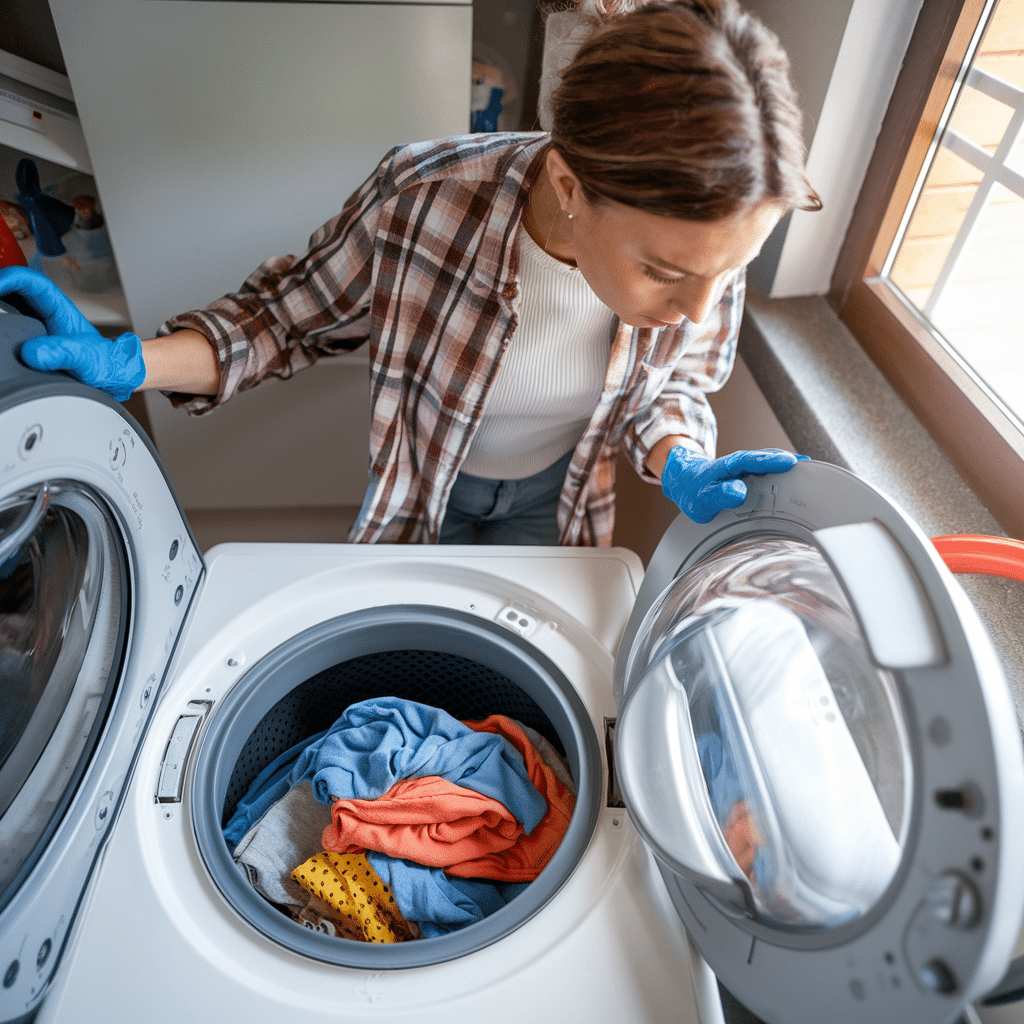
Before you touch any mechanical components, open the washer and examine how the clothes are distributed. In Woodland Hills homes with large-capacity front-loaders—common in Vista De Oro and College Acres properties built in the last two decades—a single heavy comforter or bath mat can shift entirely to one side during the fill cycle. Modern washers have sensors that detect this imbalance and refuse to spin at high speeds to prevent the drum from damaging internal components.
Redistribute the load evenly around the drum, ensuring heavy items aren’t bunched together. If you have a top-loader, arrange items in a circular pattern rather than piling everything on one side. Run a spin-only cycle to test. If the machine spins normally with a balanced load, you’ve just saved yourself a service call. If it still won’t spin, move to the next diagnostic step.
Test the Lid Switch or Door Latch Mechanism
Top-loading washers use a lid switch that prevents spinning when the lid is open—a safety feature that stops the drum from injuring someone reaching inside. Over time, these switches wear out or get stuck. Front-loaders use a door latch assembly that serves the same purpose. Both components fail frequently in Woodland Hills’s hard water environment, where mineral deposits can interfere with mechanical contacts.
For top-loaders, press down firmly on the lid switch (usually a small plastic plunger near the lid hinge) while starting a spin cycle. If you hear a click but the machine still won’t spin, the switch may have failed internally. For front-loaders, check if the door clicks audibly when you close it. If the latch feels loose or doesn’t engage with a solid click, the door lock assembly likely needs replacement. This is a common repair we handle through our washing machine repair services in Woodland Hills, typically costing $120-$180 for parts and labor.
Inspect the Drive Belt for Wear or Breakage
If your washer fills and drains but the drum doesn’t rotate at all—not even during agitation—the drive belt has likely snapped or slipped off the pulley. This rubber belt connects the motor to the drum, and it wears down over years of use. In Woodland Hills’s climate, where garage-installed washers experience temperature swings, rubber components degrade faster than in climate-controlled laundry rooms.
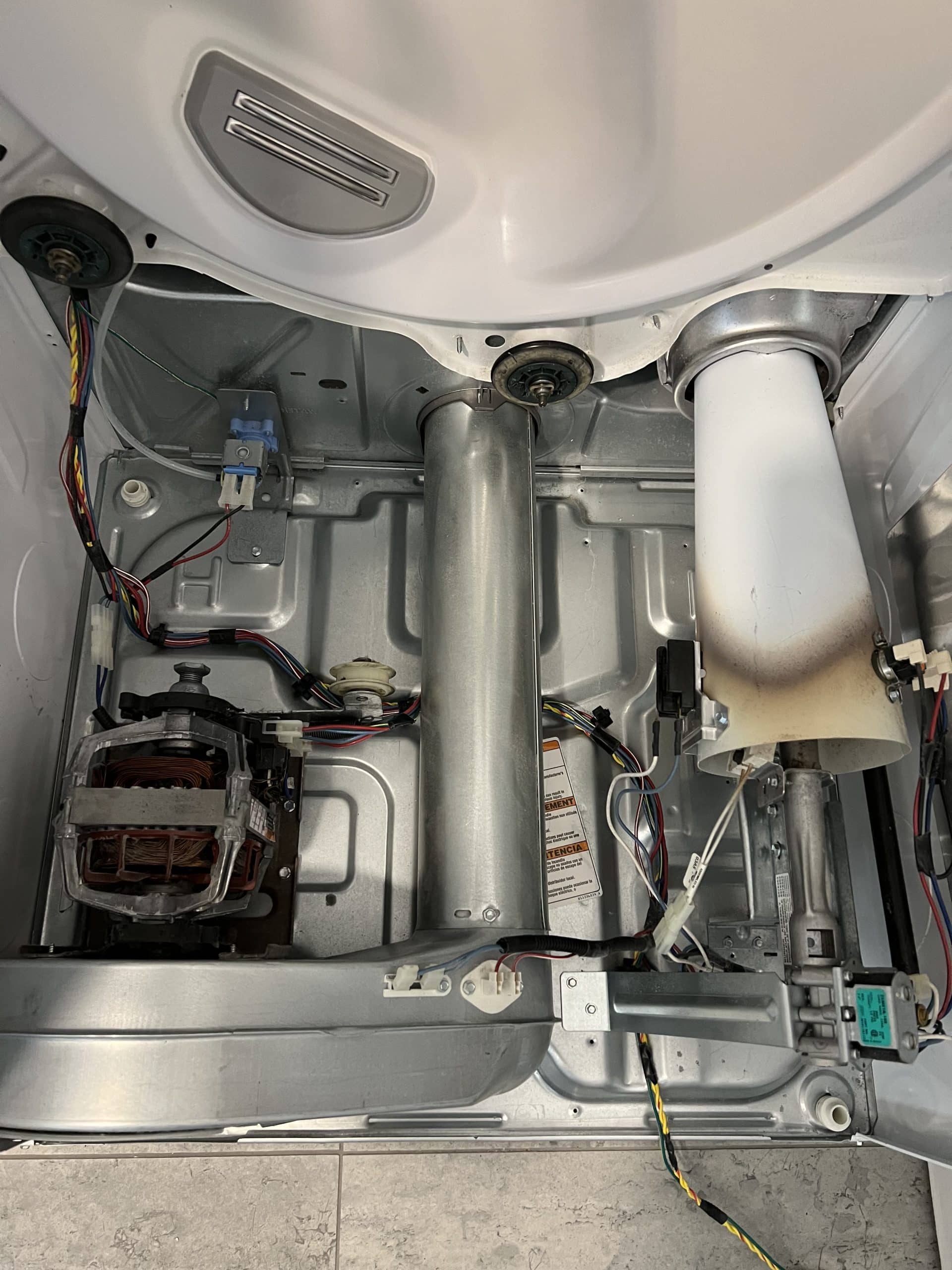
To inspect the belt, you’ll need to access the back or bottom panel of the washer (consult your model’s manual for specific instructions). Unplug the machine first. Look for a black rubber belt looped around the motor pulley and drum. If it’s broken, frayed, or completely missing, that’s your problem. Replacement belts cost $15-$30, but installation requires removing the drum in most models—a job best left to professionals unless you’re mechanically inclined. Expect to pay $150-$250 for professional belt replacement in the Woodland Hills area.
When Hard Water Compounds Belt Problems
Woodland Hills receives relatively hard water (averaging 200-300 ppm total dissolved solids), which leaves mineral deposits throughout your washer’s internal components. These deposits can accumulate on pulleys and bearings, creating additional friction that accelerates belt wear. If you’ve replaced a drive belt before and it failed again within two years, hard water buildup is likely contributing to premature wear.
Check the Motor Coupling on Direct-Drive Models
Many top-loading washers manufactured in the past 15 years use a direct-drive system instead of a belt. These models connect the motor to the transmission with a small plastic coupling that’s designed to break under excessive strain—protecting the motor from damage when something jams the drum. Unfortunately, this coupling also breaks during normal use over time, especially if you frequently wash heavy loads like the king-size comforters common in Woodland Hills’s million-dollar homes.
A broken motor coupling produces a distinct symptom: the motor runs (you’ll hear it humming), but the drum doesn’t move at all. This differs from a failed motor, which produces no sound when you start a cycle. Accessing the motor coupling requires removing the washer cabinet, which involves several bolts and the possibility of damaging clips if you’re unfamiliar with appliance disassembly. Professional replacement typically costs $130-$200, including the $10-$20 part.
Verify the Drain Pump and Drain Hose Are Clear
Some washers refuse to spin if they detect water still in the drum, even if you can’t see standing water. A partially clogged drain pump or kinked drain hose can prevent complete drainage, triggering a safety sensor that halts the spin cycle. This is particularly common in Woodland Hills homes where residents use softeners or additives to combat hard water—these products can create sticky residue that clogs drain components.
Check the drain hose (the large corrugated hose running from the washer to your standpipe or sink) for kinks or compression. Straighten any bends and ensure the hose isn’t pushed too far into the standpipe, which can create a siphoning effect. Next, locate the drain pump filter (usually behind a small access panel at the washer’s front or bottom). Place towels around the area, slowly unscrew the filter, and check for debris: coins, buttons, lint buildup, or small clothing items. Clean thoroughly and test again. If the pump itself has failed mechanically, you’ll need professional replacement—typically $180-$280 in the Woodland Hills area, similar to costs for washing machine repairs in nearby Calabasas.
Know When to Call a Licensed Appliance Repair Technician
While the checks above are safe for homeowners to perform, certain washing machine problems require professional diagnosis. If you’ve verified the load is balanced, the lid switch engages, the drive belt is intact, and the drain system is clear—but the machine still won’t spin—you’re likely dealing with a more complex issue: a failed motor, a broken transmission, worn drum bearings, or a defective control board.
These repairs require specialized tools, technical knowledge, and often manufacturer-specific parts. Attempting them yourself risks additional damage that could transform a $250 repair into a $600 problem. When you need a licensed appliance repair technician who can accurately diagnose spin cycle failures, ACE Appliance Heating and Cooling provides same-day service to Woodland Hills, Carlson Park, and surrounding communities. We stock common parts for all major brands and provide upfront pricing before starting any work.
For homes in higher elevations like Topanga or Thousand Oaks, we also serve those communities with the same commitment to quality—check our Topanga washing machine repair and Thousand Oaks washing machine repair pages for service details. Call us at (818) 939-4882 to schedule a diagnostic visit. We’ll identify the exact cause of your spin cycle failure and provide repair options that make financial sense for your specific situation.
ACE Appliance Heating and Cooling
Get Your Free Quote Today