

How Often Should Topanga Homeowners Clean Their Dryer Vents?
If you’re asking this question, you’re already ahead of most homeowners when it comes to fire prevention. The short answer: clean your dryer vent every 12 months at minimum, but households with larger families, pet owners, or homes backing up to Topanga State Park’s dusty trails may need professional cleaning every 6-9 months. Given Topanga’s wildfire-prone environment and the community’s mix of older construction in neighborhoods like Fernwood and Sylvia Park, neglecting this maintenance creates a compounding fire risk that’s entirely preventable.
📋 In This Guide
- ▸The Real Fire Statistics Topanga Residents Should Know
- ▸Calculating Your Household’s Specific Cleaning Schedule
- ▸Professional Assessment: What ACE Technicians Check During Service Calls
- ▸DIY Maintenance Between Professional Cleanings
- ▸The Financial Case for Regular Vent Maintenance
- ▸Schedule Your Topanga Dryer Vent Inspection Today
Topanga’s unique geography and climate make dryer vent maintenance particularly critical. The combination of dry Santa Ana winds, low humidity, and densely wooded canyons means fire hazards multiply faster here than in typical suburban settings. When lint accumulates inside vent systems—often hidden behind walls or running through attics—it creates a tinder-dry fuel source waiting for ignition. One spark from a heating element, and your $1.4 million home faces a threat that insurance adjusters see far too often in communities like this.
The Real Fire Statistics Topanga Residents Should Know
The U.S. Fire Administration reports nearly 3,000 dryer fires annually, causing approximately $35 million in property damage. What doesn’t appear in those national statistics: how Southern California’s extended dry seasons extend the danger window. In coastal and canyon communities, the traditional “fire season” now spans eight to ten months. Your dryer operates in conditions that accelerate lint drying and static buildup, both of which increase ignition risk.
In homes throughout Top O’ Topanga and Viewridge Estates, we’ve documented dryer vent systems that haven’t been serviced in 3-5 years. These systems typically contain 6-12 inches of compacted lint throughout the ductwork—enough combustible material to sustain a fire that spreads through wall cavities before homeowners even notice. The ignition temperature of dryer lint ranges between 400-500°F, while dryer heating elements routinely exceed 130-150°F. When airflow restriction causes heating elements to cycle improperly or malfunction, temperatures can spike beyond safe thresholds.
What makes Topanga particularly vulnerable is housing density combined with challenging access for emergency services. The winding canyon roads that make this community charming also create response time challenges. A dryer fire that might be contained quickly in Woodland Hills can spread catastrophically here before fire crews navigate Topanga Canyon Boulevard during peak hours.
Calculating Your Household’s Specific Cleaning Schedule
The “once per year” guideline assumes average usage patterns: 2-4 people doing 5-7 loads weekly. Topanga households often deviate significantly from this baseline. If you have children, dogs who shed, or you regularly wash horse blankets, bedding for barn animals, or heavily soiled outdoor gear, your lint production easily doubles. We recommend these adjusted schedules based on actual usage patterns we’ve observed:
For households doing 8-12 loads weekly (families with teenagers, active outdoor lifestyles, multiple pets): professional cleaning every 6 months. If anyone in your household suffers from allergies or asthma, this frequency also improves indoor air quality by preventing lint particles and mold spores from recirculating through your laundry area.
For standard 2-3 person households doing 5-7 loads weekly: annual professional cleaning remains appropriate, but inspect your exterior vent hood quarterly. If you notice lint accumulation around the flapper or reduced airflow when standing outside during a drying cycle, schedule service regardless of your last cleaning date.
For vacation properties or second homes used seasonally: clean vents before extended periods of non-use and again before resuming regular operation. Rodents and birds frequently nest in inactive dryer vents, creating blockages that aren’t lint-related but equally dangerous.
Climate also factors into frequency calculations. Topanga’s dry summers create static conditions that cause lint to adhere more stubbornly to duct interiors. Homes with longer vent runs—anything exceeding 15 feet or including multiple 90-degree turns—should default to the more aggressive cleaning schedule. Physics dictates that longer, more complex duct systems accumulate lint faster than short, straight runs.
Professional Assessment: What ACE Technicians Check During Service Calls
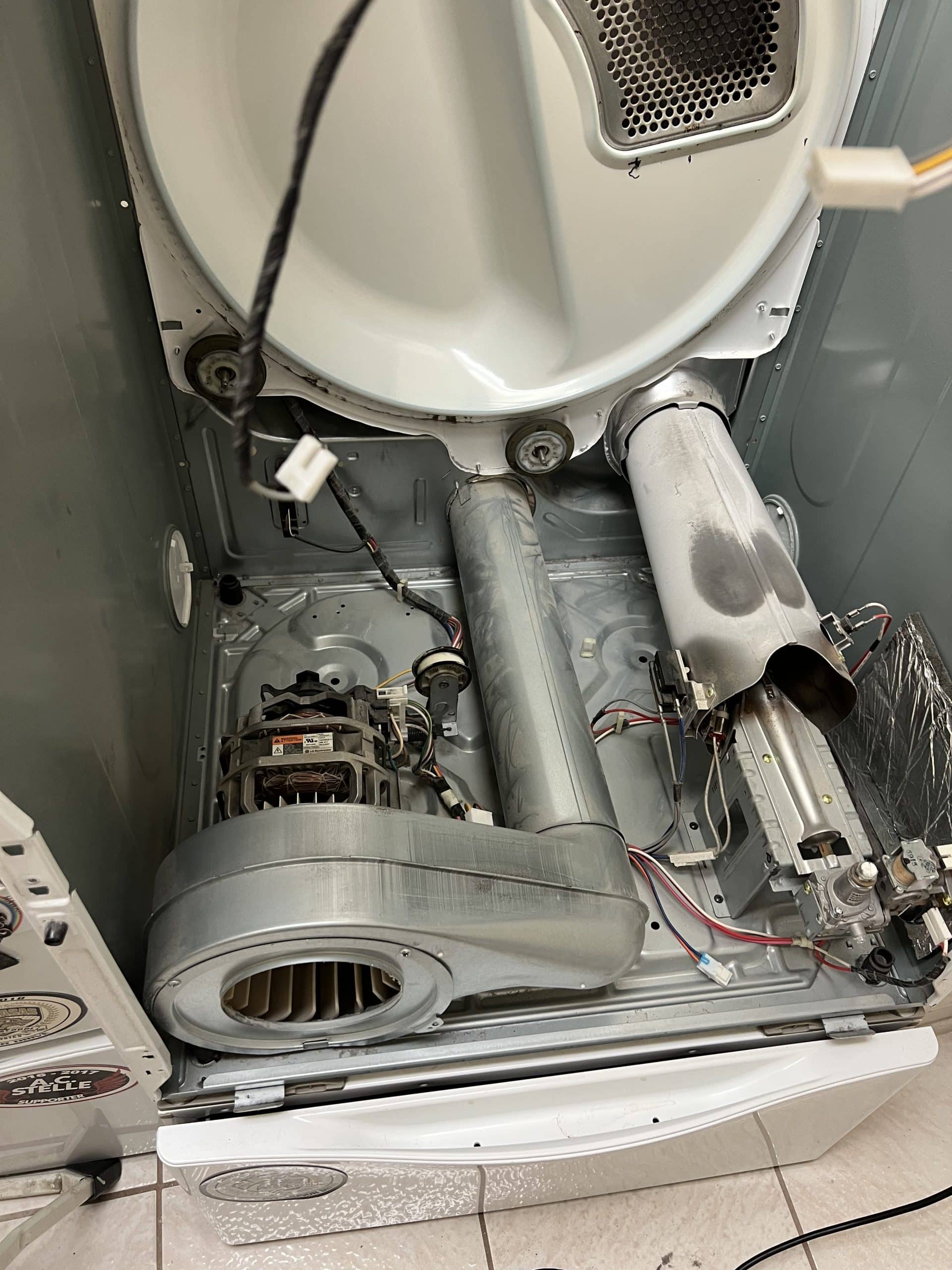
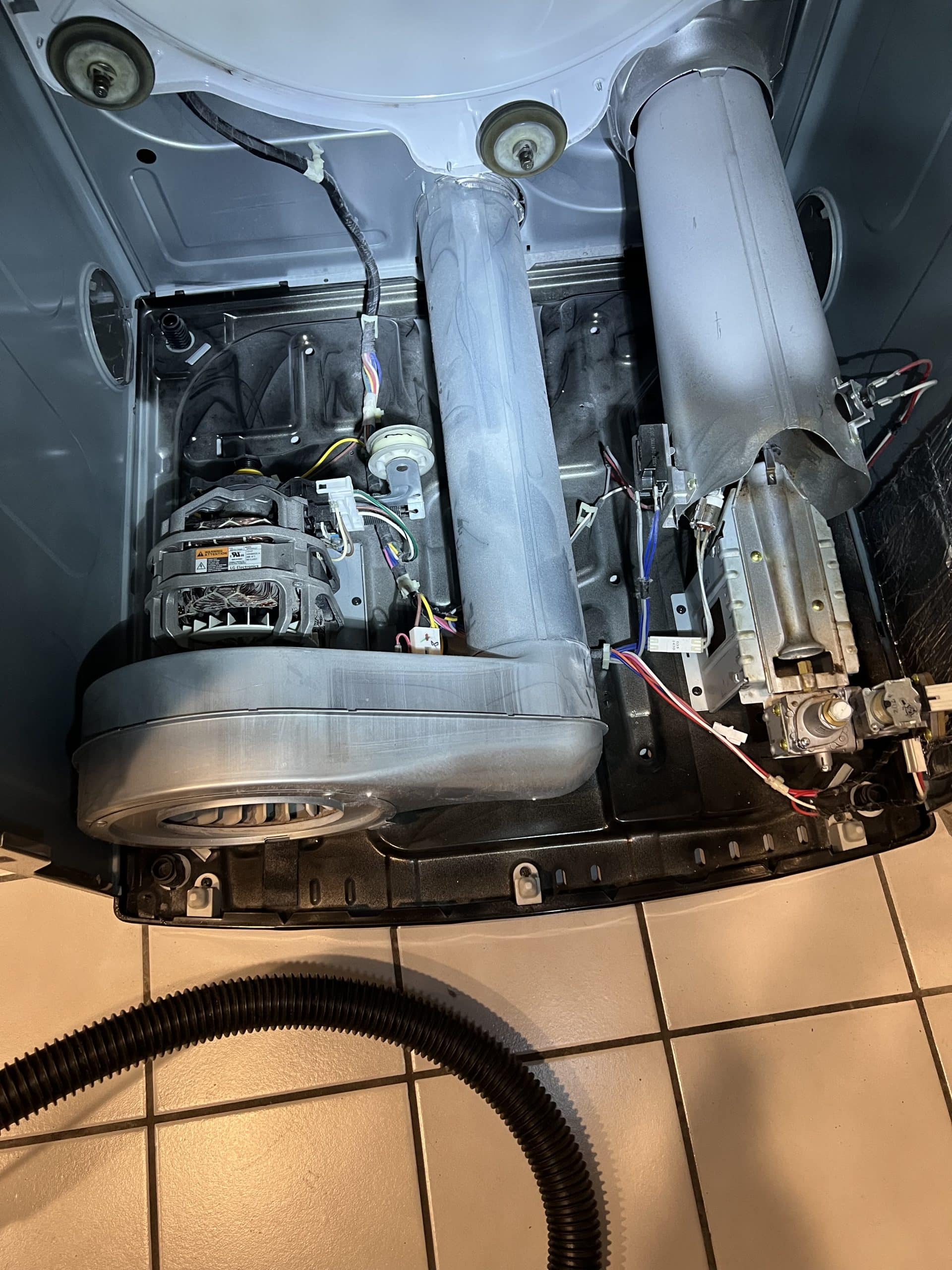
When ACE Appliance Heating and Cooling technicians service dryer vents in Topanga, we’re not just clearing the visible lint trap. Professional service addresses the entire exhaust pathway from the dryer’s blower housing through the exterior termination point. Here’s what comprehensive service involves:
We disconnect the dryer and inspect the transition duct—the flexible or rigid connection between your appliance and the wall. This 3-6 foot section accumulates surprising amounts of lint because it’s rarely cleaned during routine household maintenance. Damaged or crushed transition ducts restrict airflow even when the main vent line is clear.
Next, we use rotary brush systems and high-velocity air tools to clean the main duct run. In Topanga homes, these ducts often travel through attics or crawl spaces before exiting through exterior walls or roofs. We’ve found everything from construction debris (leftover insulation, drywall scraps) to animal nests blocking these pathways. One Fernwood home had a squirrel nest 18 feet inside the vent line—the homeowners had no idea because the dryer still ran, just took three cycles to dry a single load.
Exterior vent hood inspection reveals problems invisible from inside your home. We check for damaged flappers (which allow wildlife entry), lint accumulation around the hood (indicating poor airflow), and proper hood design. Many older Topanga homes have outdated vent hood styles that don’t meet current building codes. Upgrading to a louvered or damper-style hood improves airflow and prevents pest infiltration.
Finally, we test dryer operation post-cleaning to verify proper airflow, measure exhaust temperatures, and ensure your appliance cycles correctly. If we discover mechanical issues—faulty thermostats, worn heating elements, failing blower motors—we address them immediately. These problems often develop gradually as restricted vents force components to work harder than designed specifications allow. Our Dryer Repair in Topanga service handles both vent cleaning and appliance repairs in a single visit, saving homeowners time and money.
DIY Maintenance Between Professional Cleanings
While professional service addresses the complete system, homeowners can extend intervals with routine maintenance. Every load without exception: clean the lint screen. This takes five seconds and prevents the majority of lint from ever entering your duct system. Lint screens capture approximately 60-70% of fiber shed during drying cycles—when you skip this step, that percentage enters your ducts instead.
Monthly, disconnect your dryer’s transition duct and vacuum both the dryer outlet and the wall duct opening. You’ll need a flashlight and a vacuum with a crevice attachment. This simple task removes the lint layer that accumulates in transition ducts and prevents it from hardening into the cement-like deposits we frequently discover during professional service calls.
Quarterly, inspect your exterior vent hood. Stand outside during a drying cycle and verify strong, consistent airflow. The flapper should open fully, and you should feel warm, moist air. If airflow seems weak or the flapper barely moves, your vent needs professional attention regardless of your cleaning schedule. This simple test catches developing problems before they become fire hazards.
Watch for these warning signs that indicate immediate professional service is needed: drying times extending beyond 45-50 minutes for normal loads, clothes emerging hotter than usual, musty odors on dried laundry, excessive lint around the dryer or laundry room, visible lint accumulation around the exterior vent hood, or the dryer exterior feeling unusually hot during operation. Any of these symptoms indicates airflow restriction serious enough to create fire risk.
The Financial Case for Regular Vent Maintenance
Homeowners sometimes balk at professional vent cleaning costs until they understand the economics. Clogged dryer vents force your appliance to run longer, consuming more electricity or gas. A dryer operating with 50% airflow restriction can increase energy consumption by 20-30%. For a Topanga household running 8 loads weekly, that’s approximately $150-200 annually in wasted utility costs—enough to pay for professional cleaning twice over.
More significantly, restricted airflow shortens dryer lifespan. Heating elements, thermostats, and blower motors wear out faster when forced to operate under strain. The typical dryer should last 10-13 years; models servicing households with chronically clogged vents often fail at 6-8 years. Replacing a quality dryer costs $800-1,500—professional maintenance represents insurance against premature replacement.
Then there’s the property value consideration. In Topanga’s high-value real estate market, buyers and inspectors scrutinize fire safety measures. Homes with documented dryer vent maintenance history demonstrate responsible ownership. Conversely, home inspections that reveal neglected vents can trigger repair negotiations or even affect insurance eligibility.
For comprehensive appliance care throughout your home, ACE also provides Washing Machine Repair in Topanga and Refrigerator Repair in Topanga, helping protect all your major appliance investments.
Schedule Your Topanga Dryer Vent Inspection Today
If you can’t remember your last professional dryer vent cleaning—or if you’ve never had one—contact ACE Appliance Heating and Cooling at (818) 939-4882. Our technicians service the entire Topanga area, from canyon homes near Topanga State Park to properties in Viewridge Estates. We provide transparent pricing, same-day service availability, and the peace of mind that comes from working with licensed professionals who understand Southern California’s unique fire safety requirements.
Don’t wait until warning signs appear. In Topanga’s fire-prone environment, proactive maintenance isn’t optional—it’s essential protection for your family and your property investment. Our our appliance repair services in Topanga cover all your appliance maintenance needs, delivered by technicians who live and work in the communities we serve.
ACE Appliance Heating and Cooling
Get Your Free Quote Today