

Woodland Hills Dryer Repair: Internal Lint Contamination & Airflow Recovery
This Woodland Hills dryer was serviced due to long drying times and excessive heat buildup, despite the unit still running and producing heat. Unlike electrical or gas component failures, the root issue here was severe internal lint contamination restricting airflow inside the dryer cabinet.
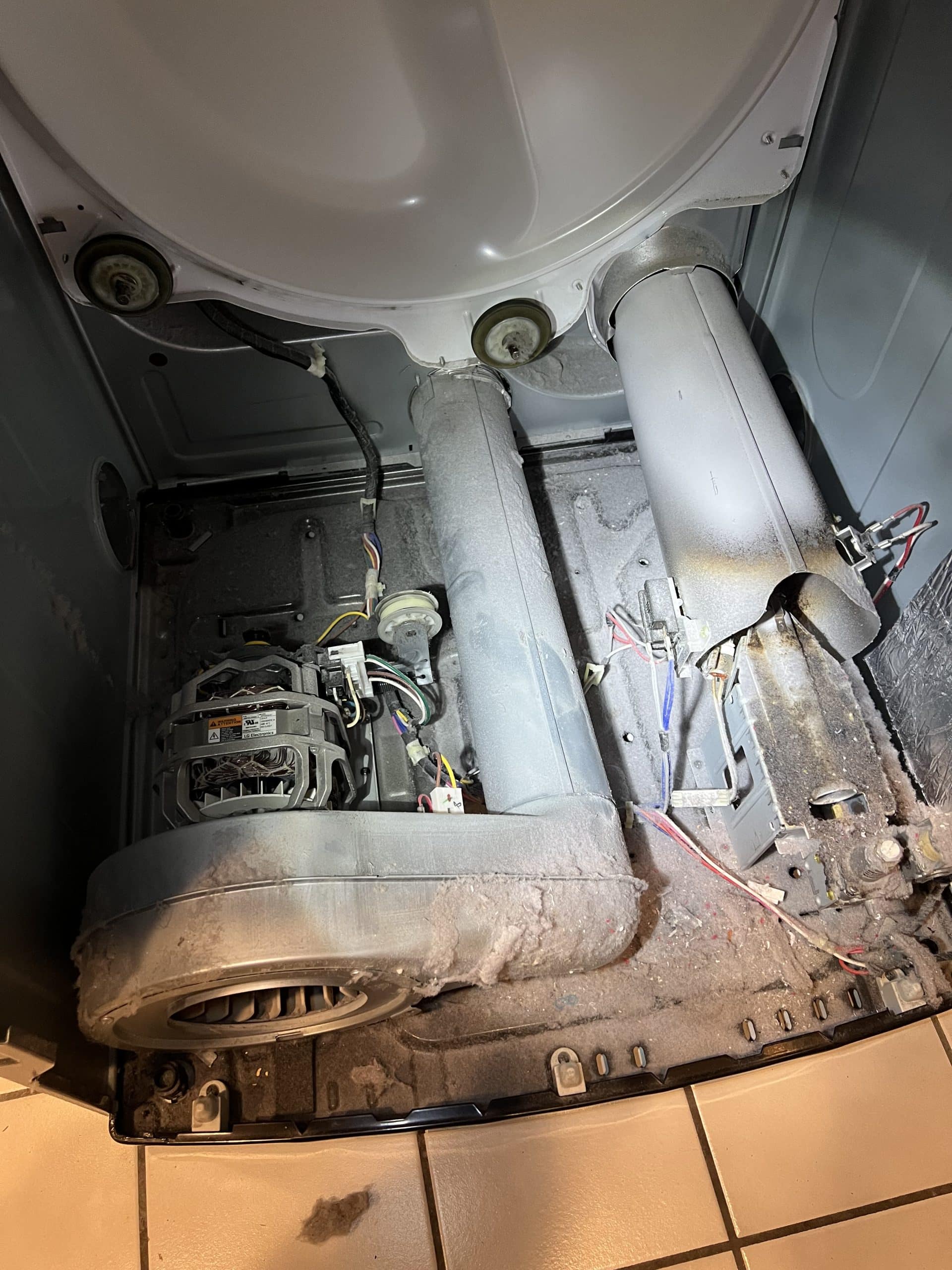
Once opened, heavy lint accumulation was visible along the blower housing, duct path, and base of the cabinet. Over time, this type of buildup disrupts airflow balance, traps heat inside the unit, and places unnecessary strain on the motor, blower wheel, and heating system.
What the Photos Reveal Inside the Dryer
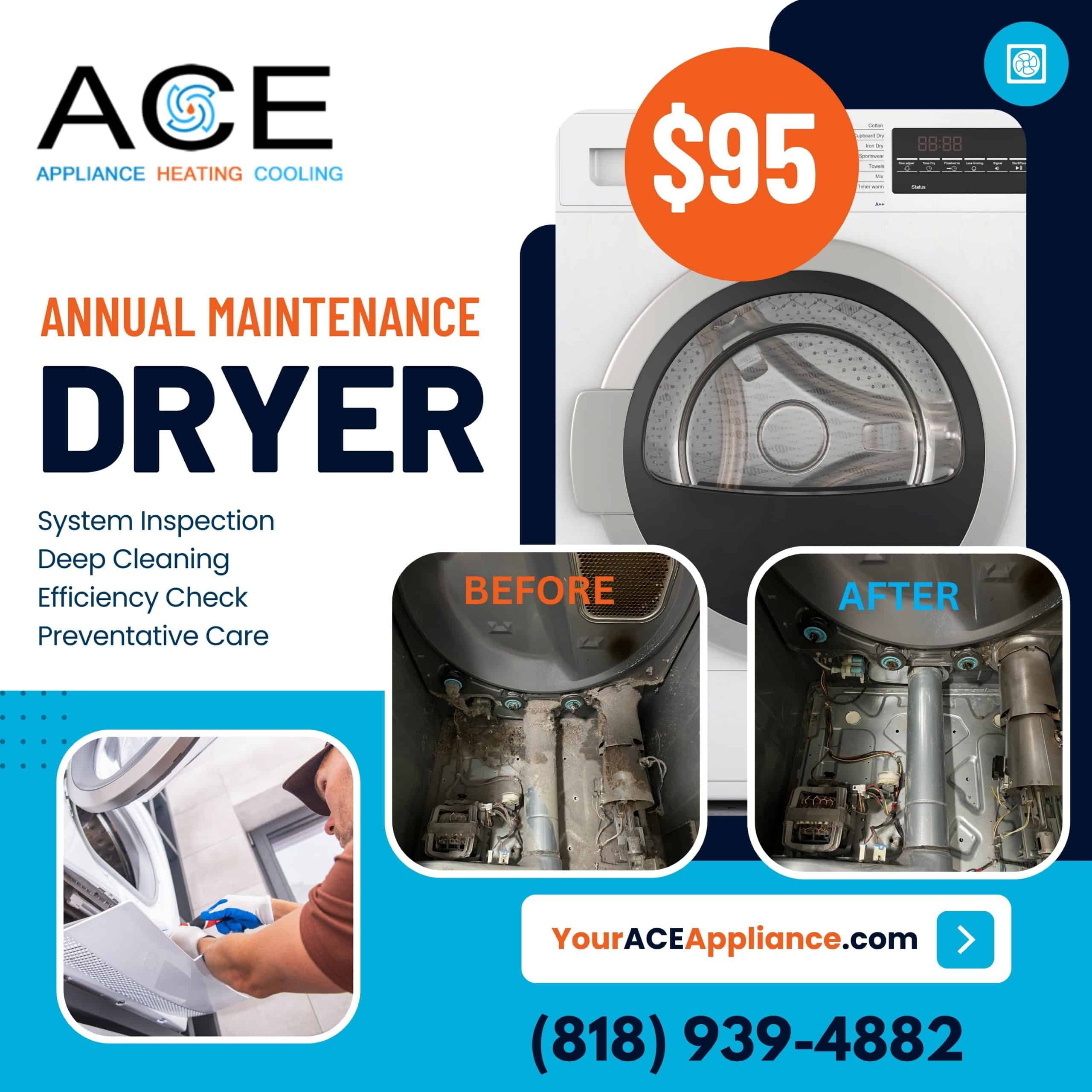
The before image shows lint packed around the blower housing and airflow intake, preventing proper air movement from the drum to the exhaust. This restriction forces the dryer to run hotter and longer to compensate, often without triggering an immediate shutdown.
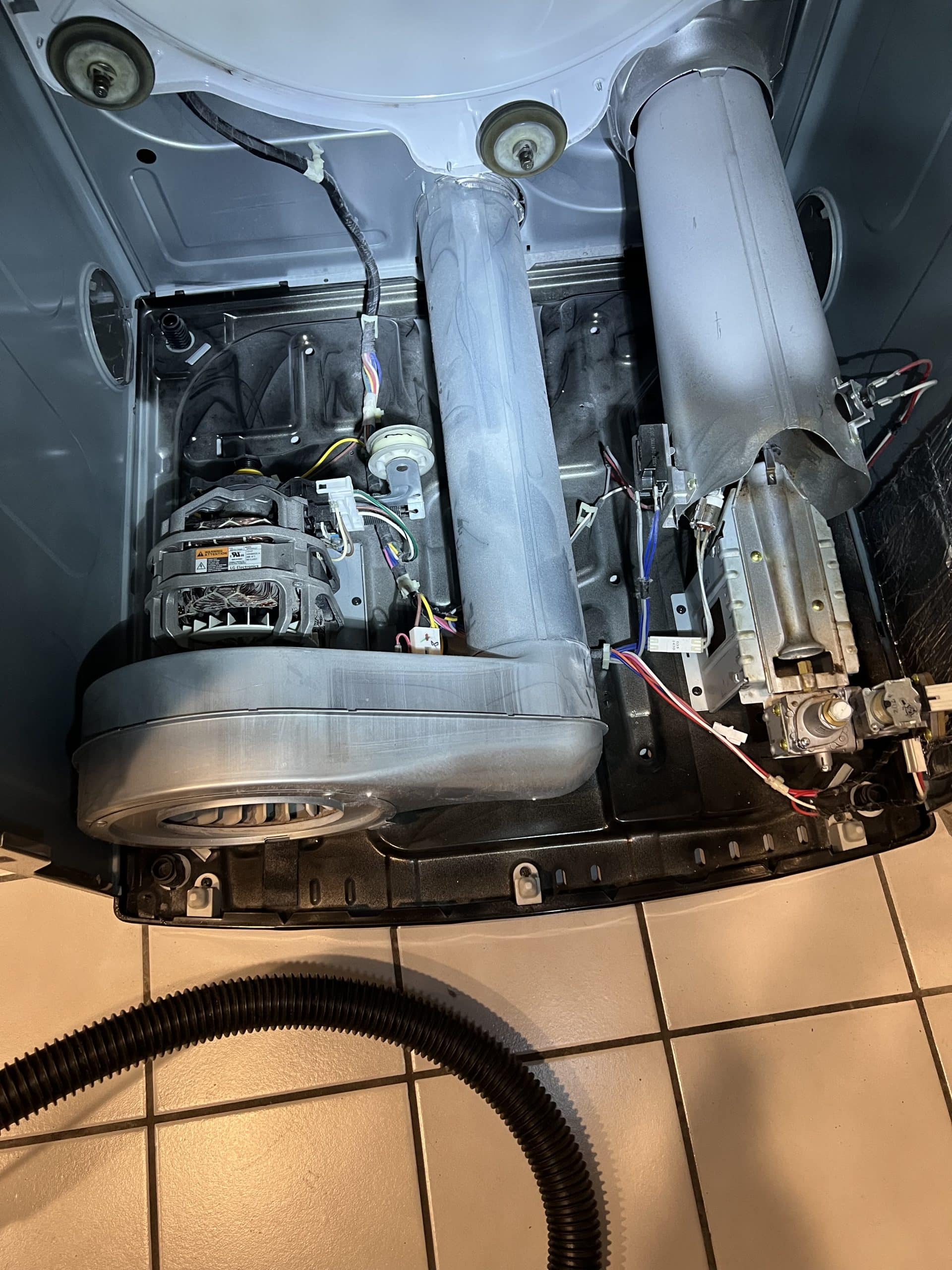
After professional internal cleaning, the second image shows a fully cleared blower housing, open duct paths, and restored airflow channels. Removing this buildup allows the dryer to operate within safe temperature ranges while significantly improving drying performance.
Why Internal Lint Is More Dangerous Than a Clogged Vent
Many homeowners clean the lint trap regularly and assume airflow problems come only from the exterior vent. In reality, lint frequently bypasses the trap and settles inside the cabinet, especially in older dryers or units used heavily.
Internal lint buildup can cause:
Because this lint is hidden, the problem often goes unnoticed until performance drops or temperatures rise dangerously.
Instead of paying for a costly replacement, the Topanga homeowner had their dryer restored for a fraction of the price. More importantly, they could now do laundry with peace of mind, knowing the unit had been inspected and made safe by a licensed technician.
We also recommended they schedule Annual Dryer Maintenance Service to prevent lint buildup from creating another fire hazard. This service includes a full safety inspection, vent check, and cleaning of internal components.
Why This Is Common in Woodland Hills Homes
Dryers in Woodland Hills homes are especially prone to internal lint buildup due to a combination of long vent runs, higher household dust levels, and frequent dryer usage. Homes with pets contribute additional hair and debris that can bypass the lint screen and collect inside the cabinet.
Over time, airflow loss becomes gradual. Homeowners often report that the dryer “still works,” but takes longer to dry and feels hotter than normal—classic signs of internal airflow restriction.
Professional Dryer Cleaning vs DIY Maintenance
This repair required full cabinet access, something that cannot be achieved through the lint trap or exterior vent alone. The service involved removing accumulated lint from the blower housing, ducting, motor area, and base pan, followed by airflow verification and safety inspection.
DIY vent cleaning tools do not address internal cabinet contamination. Professional dryer troubleshooting ensures airflow is restored throughout the entire system—not just at the exit point.
ACE Dryer Repair in Woodland Hills
If your dryer is running hot, taking longer to dry, or producing excessive heat without obvious vent blockage, internal lint buildup may be the cause.
ACE Appliance Heating & Cooling provides licensed dryer repair in Woodland Hills, including internal cabinet cleaning, airflow restoration, and full safety inspections for gas and electric dryers.
Call (818) 939-4882 to schedule professional dryer service today.
Woodland Hills Dryer Repair – FAQs
Yes. Periodic internal cleaning helps prevent airflow loss and extends dryer lifespan.
Yes—gas dryer repair, electric dryer repair, vented dryers, condenser dryers, and select heat pump dryers.
Restricted airflow increases fire risk and can cause overheating. Internal lint buildup is a common hidden hazard.
Yes. Poor airflow causes heat buildup that damages burners, heating elements, sensors, and motors.
This usually points to restricted airflow inside the dryer or vent system, not a complete heating failure.
ACE Appliance Heating and Cooling
Get Your Free Quote Today
Recommended Articles
-
 Washer Won't Spin? Here's What Woodland Hills Homeowners Get Wrong—And How to Fix It
Most Woodland Hills homeowners think a non-spinning washer means motor failure, but 70% of the time it's a…
-
Washing Machine Shaking Violently? Woodland Hills Repair Tips
Discover why washing machines shake violently in Woodland Hills homes and learn which problems require professional repair. From…
-
Dishwasher Leaving a Pool of Water? What Woodland Hills Homeowners Risk by Waiting
Standing water in your Woodland Hills dishwasher? Discover five practical troubleshooting steps you can take today—from air gap…
-
Dryer Vent Cleaning in Woodland Hills: Comparing Annual Service vs. Usage-Based Schedules
Discover why dryer vent cleaning is critical fire prevention in Woodland Hills' dry climate. Learn warning signs of…
❓ Frequently Asked Questions
Why does my gas stove burner click but not light in Woodland Hills?
When your gas stove burner clicks but won't light, the igniter is functioning but can't create combustion. The most common causes include food debris or grease blocking the igniter electrode, moisture in the igniter assembly after cleaning, or misaligned burner caps preventing proper gas flow. In Woodland Hills homes, we frequently see this after thorough stovetop cleaning when components haven't dried completely. Start by removing the burner cap and gently cleaning around the igniter with a dry brush. Ensure all parts are completely dry and properly aligned before testing again. If cleaning doesn't resolve the issue, the igniter electrode may be weakened or cracked and require professional replacement by calling ACE Appliance at (818) 939-4882.
Is it safe to use my gas stove if one burner won't ignite?
If only one burner fails to ignite while others work normally, you can safely use the functioning burners. However, avoid attempting to manually light the problematic burner with matches or lighters, as this can be dangerous. If you smell gas when turning the knob but hear no clicking, turn off the control immediately and call for professional service. Never leave a burner knob in the "on" position if it's not lighting, as this releases unburned gas into your kitchen. For Woodland Hills homeowners with high-end ranges, ignoring burner problems can lead to more expensive repairs as secondary damage occurs to control systems. ACE Appliance can diagnose the specific issue and determine whether it's a simple fix or requires component replacement, protecting both your safety and your valuable cooking equipment.
How much does it cost to fix a gas stove igniter in Woodland Hills?
Gas stove igniter repair costs in Woodland Hills typically range from $150 to $350, depending on your stove's brand, model, and the specific component that needs replacement. Premium brands like Wolf, Viking, or Thermador common in Woodland Hills' upscale homes may have higher parts costs but are usually worth repairing given the appliance's overall value. The diagnostic visit identifies whether you need a simple cleaning (often under $100), igniter electrode replacement, or control module repair. ACE Appliance provides transparent pricing before beginning any work, and we carry common parts for popular stove brands to complete most repairs in a single visit. When you've invested in a high-value Woodland Hills home with a quality kitchen, professional repair typically costs far less than premature replacement and protects your home's value.
Can I clean my gas stove igniter myself or do I need a professional?
Woodland Hills homeowners can safely perform basic igniter cleaning as regular maintenance. With the stove off and cool, remove burner caps and grates, then gently clean around the igniter electrode using a dry, soft brush or cloth to remove food debris and grease buildup. Ensure all components are completely dry before reassembling—moisture is a leading cause of temporary ignition failure. However, if cleaning doesn't restore function, or if you notice cracked or damaged igniter components, professional service becomes necessary. Never attempt to adjust gas flow, modify electrical connections, or disassemble internal control systems without proper training. ACE Appliance technicians serving Woodland Hills have specialized tools and manufacturer training to safely diagnose and repair complex igniter problems that go beyond routine cleaning, protecting both your safety and your appliance warranty coverage.